UNDERSTANDING YOUR CARE

Why Chiropractic Care Happens in Phases

The care you need when you first walk through our doors may look very different from the care you need after your body has begun to improve.

That's why we don't think of chiropractic care as one fixed schedule. At Trinity Chiropractic Center, care changes as you change. We look at how you're feeling, how you're functioning, what we found during your evaluation, and how your body is responding along the way.

Our three phases — Soothe, Stabilize, and Sustain — give us a framework for helping you understand what we're working toward and why recommendations may change over time.

LOOKING DEEPER

What Changes in the Spine Over Time?

Spinal changes usually don't happen overnight.

Age, previous injuries, repetitive stress, activity, posture, accidents, and everyday wear can all contribute to changes in the joints and discs of the spine over time.

Some of those changes can be seen on X-rays. Others may be noticed in how an area moves, feels, or functions.

This is one reason we look at the bigger picture rather than focusing only on where something hurts.

01

Pain Is Only One Piece of the Picture

Symptoms and structural findings do not always match perfectly. Some people have degenerative changes with very little discomfort, while others experience significant symptoms with fewer visible changes.

Your history, symptoms, function, examination, and imaging when clinically appropriate are considered together.

UNDERSTANDING WHAT WE FOUND

What Do We Mean by Subluxation or Dysfunction?

At Trinity, we use the term subluxation to describe an area of the spine that is not moving or functioning as well as it should.

These areas may be associated with stiffness, altered movement, irritation, discomfort, or changes in the way surrounding muscles and joints are working together.

Chiropractic care focuses on improving movement and function in these areas while considering the rest of your findings and how your body responds to care.

01 Movement

Is the joint moving the way we would expect it to?

02 Function

How is the area working together with the rest of your body?

03 Response

How does your body respond as care progresses?

UNDERSTANDING DEGENERATION

Structural Changes Can Develop Gradually

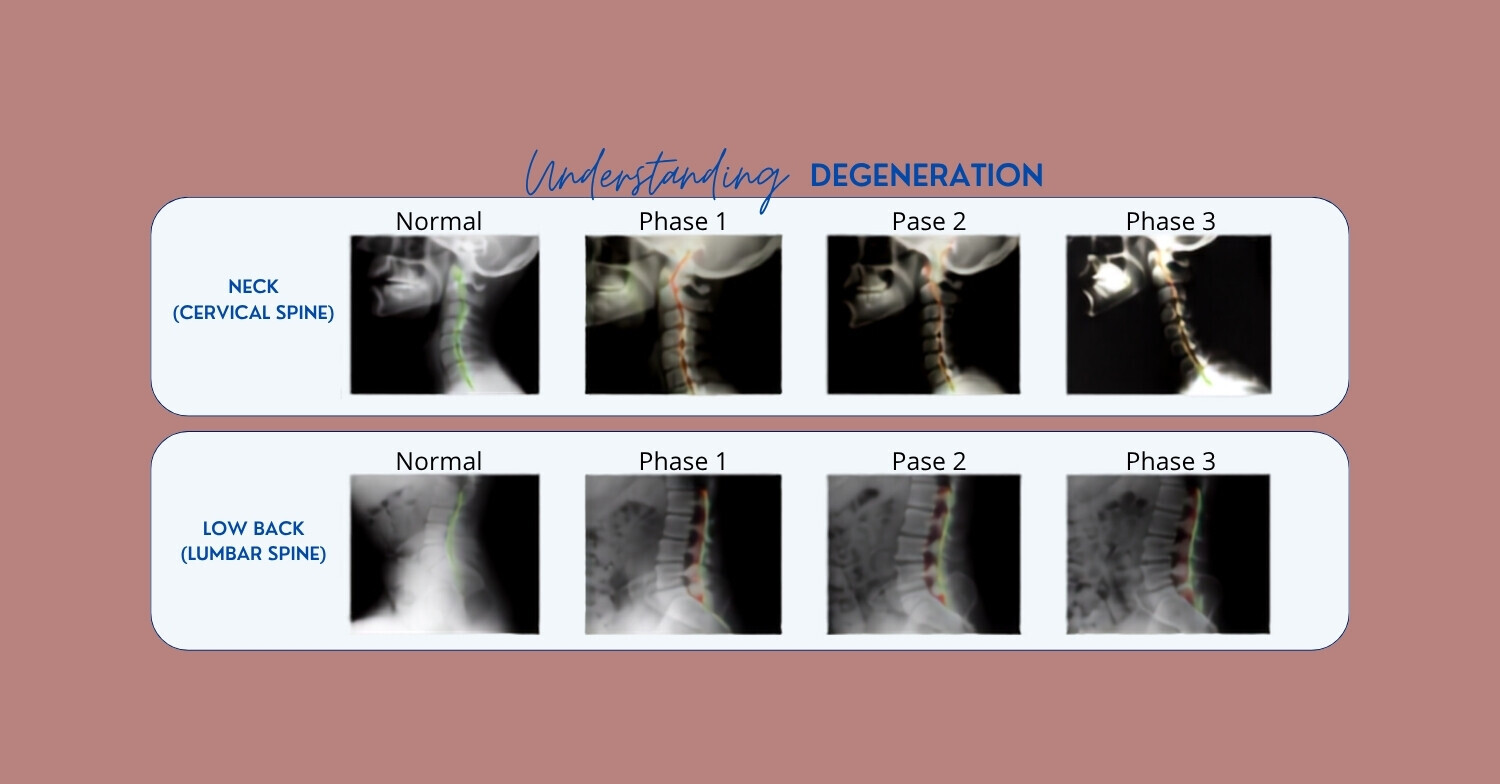
Degeneration refers to structural changes that can develop within spinal joints and discs over time.

These changes may include disc thinning, changes in joint shape, bone spurs, reduced mobility, and changes in the normal curves of the spine.

Examples of progressive degenerative changes in the cervical and lumbar spine

IMPORTANT TO UNDERSTAND

Pain Does Not Always Reflect the Amount of Degeneration Present

Some people have significant degenerative findings before symptoms become noticeable. Likewise, symptoms may improve even though long-term structural changes remain visible on imaging.

That's why we don't base recommendations on X-rays or pain alone. We consider the full picture.

YOUR CARE JOURNEY

The Three Phases of Care

Each phase has a different purpose. As you make progress, the focus and frequency of care may change with you.

PHASE 01

Soothe

Calm irritation and begin restoring movement.

Early care is often more frequent because we're working with areas that may currently be irritated, restricted, or not functioning well.

Consistency during this phase gives us repeated opportunities to work on movement and function while monitoring how your body responds.

The goal: Begin making meaningful progress and create a foundation for the next phase.

PHASE 02

Stabilize

Build on the progress you've made.

Feeling better is an important milestone, but symptoms are only one part of how we evaluate progress.

As improvements begin to hold, visits may spread out while we continue looking at movement, function, stability, and your original goals.

The goal: Help your progress become more consistent between visits.

PHASE 03

Sustain

Support long-term movement and function.

Once you've reached a more stable place, care becomes less frequent and shifts toward supporting the progress you've made.

Some patients choose periodic wellness care while others prefer to return as needed. We'll explain your options so you can decide what fits your goals.

The goal: Support the progress you've made and your long-term health goals.

MEASURING PROGRESS

How Do We Know When It's Time to Change Phases?

Your care doesn't change simply because a certain number of weeks has passed.

Dr. Branden considers how you're progressing and whether your improvements are becoming more stable before recommending changes in frequency or focus.

01

How you're feeling

02

Movement and function

03

Whether improvements are holding between visits

04

Progress toward your original goals

05

Findings from progress evaluations

06

Imaging when clinically appropriate

QUESTIONS FAMILIES OFTEN ASK

Common Questions About Care

Can I Just Come In When It Hurts?

Yes. Some patients prefer symptom-based care while others choose a more structured plan. We'll explain our recommendations and why we're making them so you can decide what approach fits your goals.

What Happens If I Stop Care Early?

If you decide to stop or change your recommended care plan, we'll help you understand your progress, any remaining care, and the financial terms of your agreement.

Will My Insurance Cover Chiropractic Care?

Trinity Chiropractic Center is a cash-based practice and does not bill insurance directly. When appropriate, we can provide a superbill that you may submit to your insurance company for possible reimbursement.

Is Chiropractic Care Safe?

Chiropractic care is individualized to your health history and needs. Dr. Branden will review whether chiropractic care is appropriate for you and modify the approach when necessary.

UNDERSTANDING IS PART OF YOUR CARE

Know What We're Working Toward — and Why

You shouldn't leave your Report of Findings wondering what Dr. Branden saw or why a particular plan was recommended.

Our goal is to help you understand your findings, your options, and how your care may change as you progress.