IASTM & MANUAL THERAPY

Supporting the Muscles and Soft Tissues Around Your Joints

Sometimes improving how a joint moves means paying attention to the muscles and soft tissues surrounding it too.

At Trinity Chiropractic Center, Dr. Branden may incorporate Instrument-Assisted Soft Tissue Mobilization (IASTM) or hands-on manual therapy alongside chiropractic care when he feels the surrounding tissues would benefit from additional attention.

These techniques are used as supportive tools within your overall care plan rather than as a one-size-fits-all treatment.

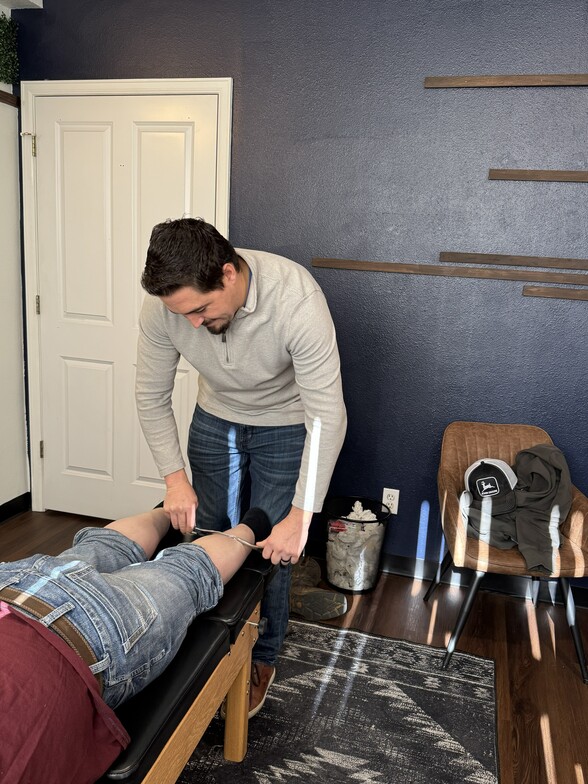
Graston instrument used for soft tissue mobilization at Trinity Chiropractic Center

INSTRUMENT-ASSISTED CARE

What Is IASTM?

IASTM stands for Instrument-Assisted Soft Tissue Mobilization.

It is a form of manual therapy that uses specially designed instruments to work along muscles and other soft tissues.

Dr. Branden uses Graston Technique instruments when appropriate. The tool allows him to work more specifically over areas of soft-tissue tightness or restriction while adjusting the amount of pressure based on the area being treated and your comfort level.

IASTM may be used around areas where muscle tightness or soft-tissue restriction is affecting comfortable movement.

HANDS-ON SUPPORT

Manual Therapy

Not every area needs an instrument.

Dr. Branden also uses hands-on manual therapy to work with muscles surrounding the joints being addressed during chiropractic care.

This may include focused pressure or soft-tissue work to help an area relax, reduce muscular tension, and make movement more comfortable.

The exact approach depends on what he finds and how the area responds during the visit.

01

Why Work on the Muscles Around a Joint?

Joints do not move in isolation. Muscles, tendons, and other soft tissues all contribute to how an area moves and feels.

When those tissues are tight or sensitive, Dr. Branden may address them as part of the overall visit rather than focusing only on the joint.

TWO WAYS WE MAY ADDRESS SOFT TISSUE

The Right Tool Depends on the Area

Soft-tissue care can look different from one patient — and one visit — to the next.

01

Graston / IASTM

Instrument-assisted soft-tissue work

A specialized stainless-steel instrument is moved over the treatment area using controlled pressure.

This approach allows Dr. Branden to work specifically along the soft tissues surrounding an area of concern.


02

Manual Therapy

Hands-on muscle and soft-tissue work

Dr. Branden uses his hands to work directly with muscles and soft tissues near the joints being treated.

Pressure and technique are adjusted based on the tissue, location, and your comfort.

PART OF YOUR CHIROPRACTIC CARE

Soft-Tissue Work Is Used When It Makes Sense for You

You won't automatically receive IASTM or manual therapy at every visit.

Dr. Branden may incorporate one of these techniques when he believes the muscles or soft tissues surrounding a joint are contributing to restriction, tension, or discomfort.

As those areas change, the type or amount of soft-tissue work may change too.

01

Used selectively based on your findings

02

Can be combined with chiropractic adjustments

03

Pressure and technique are individualized

04

May change as your movement and comfort change

WHAT TO EXPECT

What Does Soft-Tissue Work Feel Like?

01

Focused Pressure

You may notice pressure as Dr. Branden works over a tight or sensitive area.

02

Communication

Let us know how the area feels. Pressure can be adjusted throughout the treatment.

03

Temporary Tenderness

Some people may notice mild tenderness or sensitivity in the area afterward, particularly following more focused soft-tissue work.

CARE THAT WORKS TOGETHER

More Than Just the Adjustment

Chiropractic adjustments, soft-tissue work, and other supportive services can be used together based on your findings and goals.